You Are Not Alone: Celebrating Mental Health Awareness Month
Every May, something important happens. Conversations that are usually kept quiet begin to surface. People who have been struggling in silence find the courage to speak up. And communities, including ours, take a collective breath and say: it's okay to not be okay.
That's the heart of Mental Health Awareness Month, and we couldn't be more committed to being part of that conversation.
Why This Month Matters: Mental health conditions are more common than many people realize — and they touch every corner of our lives.
1 in 5 adults in the United States experiences a mental illness in any given year. That's approximately 57.8 million people. (NAMI, 2023)
Globally, depression is one of the leading causes of disability, affecting over 280 million people. (World Health Organization, 2023)
Nearly 50% of all lifetime mental health conditions begin by age 14 — yet the average delay between symptom onset and treatment is 11 years. (NIMH, 2022)
These numbers aren't just statistics, they represent neighbors, colleagues, students, parents, and friends. They may represent you.

1 in 5 adults in the United States experiences a mental illness in any given year. That's approximately 57.8 million people. (NAMI, 2023)
The Theme: Awareness Leads to Action
Mental Health Awareness Month, founded in 1949 by Mental Health America, is one of the longest-standing national health observances in the U.S. This year's focus is on turning awareness into action, because knowing something is wrong is only the first step. Seeking help is the next.
For many people, the biggest barrier to care isn't access or cost, it's stigma! A fear of being judged. A belief that struggling means weakness. A voice that says, "You should be able to handle this on your own." That voice is wrong. And this month, we're here to say so.
What You Can Do This Month
You don't need to overhaul your life to support your mental health. Small, consistent actions add up:
Check in with yourself honestly. Not just "I'm fine," but really — how are you doing emotionally this week?
Reach out to someone you haven't spoken to in a while. Connection is one of the most powerful mental health tools we have.
Learn the signs. Understanding what anxiety, depression, or burnout actually look like helps you recognize them — in yourself and others.
Normalize the conversation. When you talk openly about mental health, you give others permission to do the same.
People with strong social relationships have a 50% increased likelihood of survival compared to those with poor social connections. (Holt-Lunstad et al., 2010, PLOS Medicine)

Reach out to someone you haven't spoken to in a while. Connection is one of the most powerful mental health tools we have.
A Word From Our Practice
At our practice, every month is mental health month, but May gives us an extra opportunity to remind you: therapy is not just for crisis. It's for growth, clarity, self-understanding, and building the life you actually want.
Whether you've been in therapy before, are curious about it, or are supporting someone you love, we're here. Reach out, ask questions, and take that first step. You deserve support, and we'd be honored to walk alongside you.
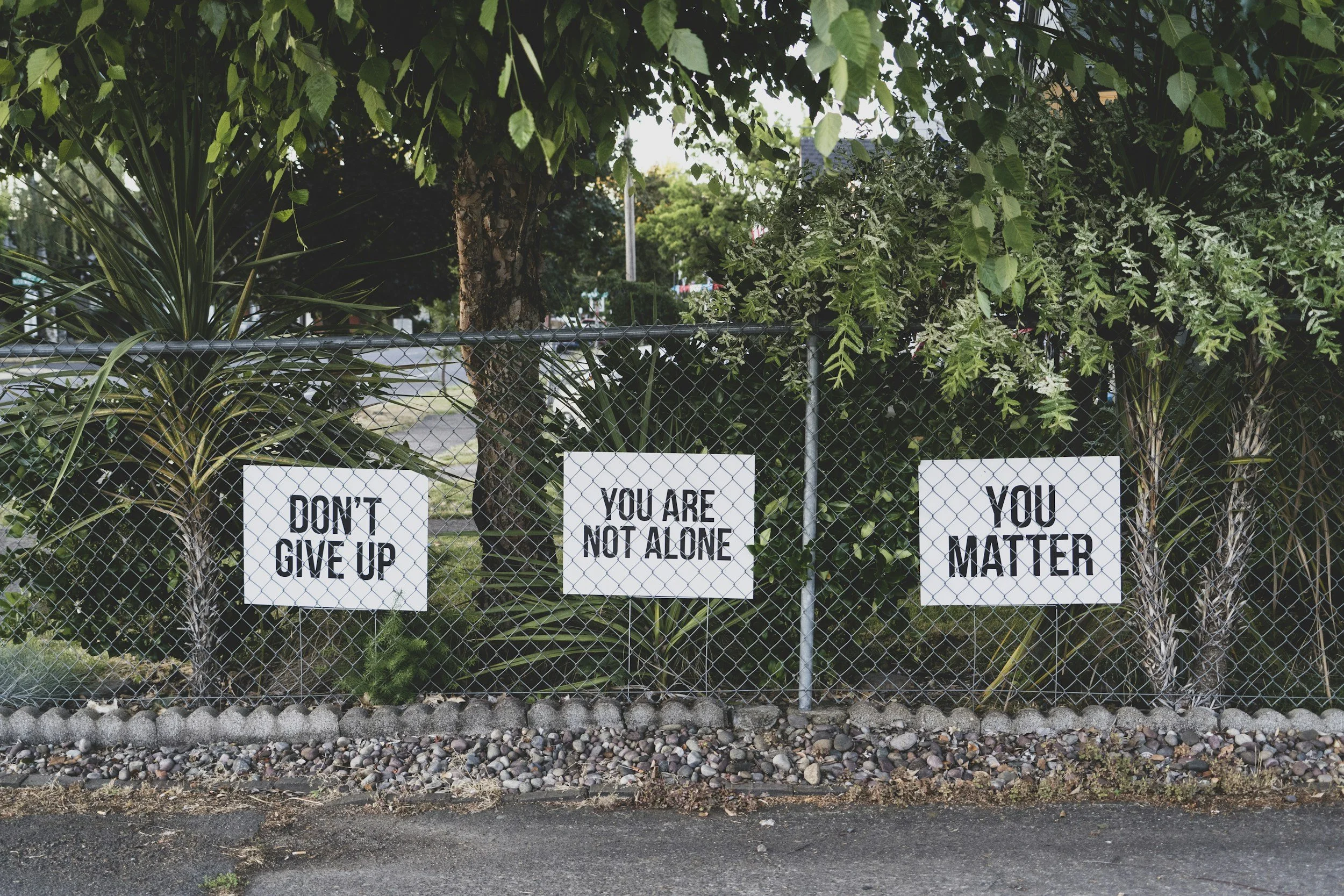
You are not alone… you matter.
National Alliance on Mental Illness (NAMI). (2023). Mental Health By the Numbers. https://nami.org
World Health Organization. (2023). Depressive disorder (depression). https://who.int
National Institute of Mental Health (NIMH). (2022). Mental Illness Statistics. https://nimh.nih.gov
Holt-Lunstad, J., Smith, T. B., & Layton, J. B. (2010). Social relationships and mortality risk: A meta-analytic review. PLOS Medicine, 7(7).